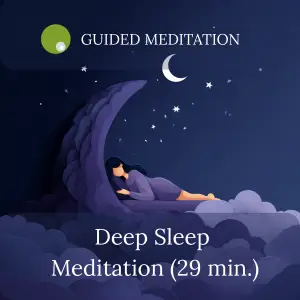
Deep Sleep Meditation – 29 min.
Why This Works
Most sleep meditations treat insomnia as a relaxation problem. This meditation treats it as what it actually is: a psychological pattern where your mind hasn’t learned how to let go at the end of the day.
This 29-minute guided practice works with the specific mental and physical patterns that keep you awake – not by forcing relaxation, but by creating the conditions where your nervous system can naturally settle.
What Makes This Different
Psychotherapeutically Informed**
Created by Laima Matulioniene, a licensed psychodynamic psychotherapist with 20+ years of clinical practice. This isn’t generic mindfulness – it’s deep sleep meditation designed with clinical understanding of how anxiety, control patterns, and unprocessed emotions disrupt sleep.
Progressive Structure
This deep sleep meditation moves through distinct phases:
– Body awareness and release (grounding the scattered mind)
– Breath regulation (signaling safety to the nervous system)
– Thought observation without engagement (breaking the rumination cycle)
– Deep rest induction (allowing natural sleep onset)
Works With Your Mind, Not Against It
Rather than trying to force your mind quiet (which creates more tension), this practice teaches your system to observe thoughts without being caught by them – the key skill for falling asleep naturally.
Who This Is For
✓ You lie awake with racing thoughts
✓ You can’t “turn off” your mind at bedtime
✓ You fall asleep but wake at 2-3am unable to return to sleep
✓ Anxiety or worry keeps you alert when you want to rest
✓ You’ve tried other sleep meditations that feel too vague or don’t address the real issue
Technical Details
Duration: 29 minutes
Format: High-quality MP3 (320kbps)
File Size: ~40 MB
Voice: Calm, clear female voice (Laima Matulioniene)
Background: Subtle ambient soundscape (optional – meditation works with or without)
Download: Instant after purchase – lifetime access
How to Use
Best practices:
– Use headphones or earbuds for deeper immersion
– Listen lying down in bed, ready for sleep
– Don’t try to stay awake through the whole meditation – falling asleep during it is the goal
– Use nightly for 7-14 days to establish the pattern
– Can be used for daytime rest or naps as well
What if I fall asleep before it ends?
Perfect – that’s exactly what should happen. Your unconscious mind continues processing the guidance even after you’ve drifted off.
Clinical Foundation
This deep sleep meditation reflects psychodynamic understanding of sleep disruption:
Sleep isn’t a switch you flip – it’s a letting go you allow.
Insomnia is often maintained by:
– Control patterns (trying to force sleep)
– Unprocessed activation from the day
– Defended-against emotions seeking expression
– A nervous system stuck in vigilance mode
This practice addresses all four by creating psychological space, building tolerance for the vulnerable state of sleep, and teaching your system that it’s safe to let go.
What People Experience
Most people notice:
– Falling asleep faster (often within 15-20 minutes vs. 60-90 minutes previously)
– Staying asleep longer (fewer middle-of-night wakings)
– Waking more rested (deeper sleep quality)
– Less anxiety about bedtime itself
– Gradual reduction in sleep medication dependency (consult your doctor)
Results build with consistent use. This isn’t a one-time fix – it’s a practice that retrains your nervous system’s relationship with sleep.
About the Creator
Laima Matulioniene
Licensed Psychodynamic Psychotherapist (EU)
20+ years clinical practice
Laima created the Mindinex meditation program from her therapeutic work with sleep, anxiety, and emotional regulation. These aren’t generic relaxation recordings – they’re psychologically informed practices designed to work with how your mind actually functions.
—
Start Sleeping Better Tonight
This meditation will be delivered instantly after purchase. Download it to your device and use it tonight.
—
Note: This meditation is designed as a self-help tool and psychological practice. It is not a replacement for medical treatment of sleep disorders. If you have chronic insomnia, please consult a healthcare provider.